
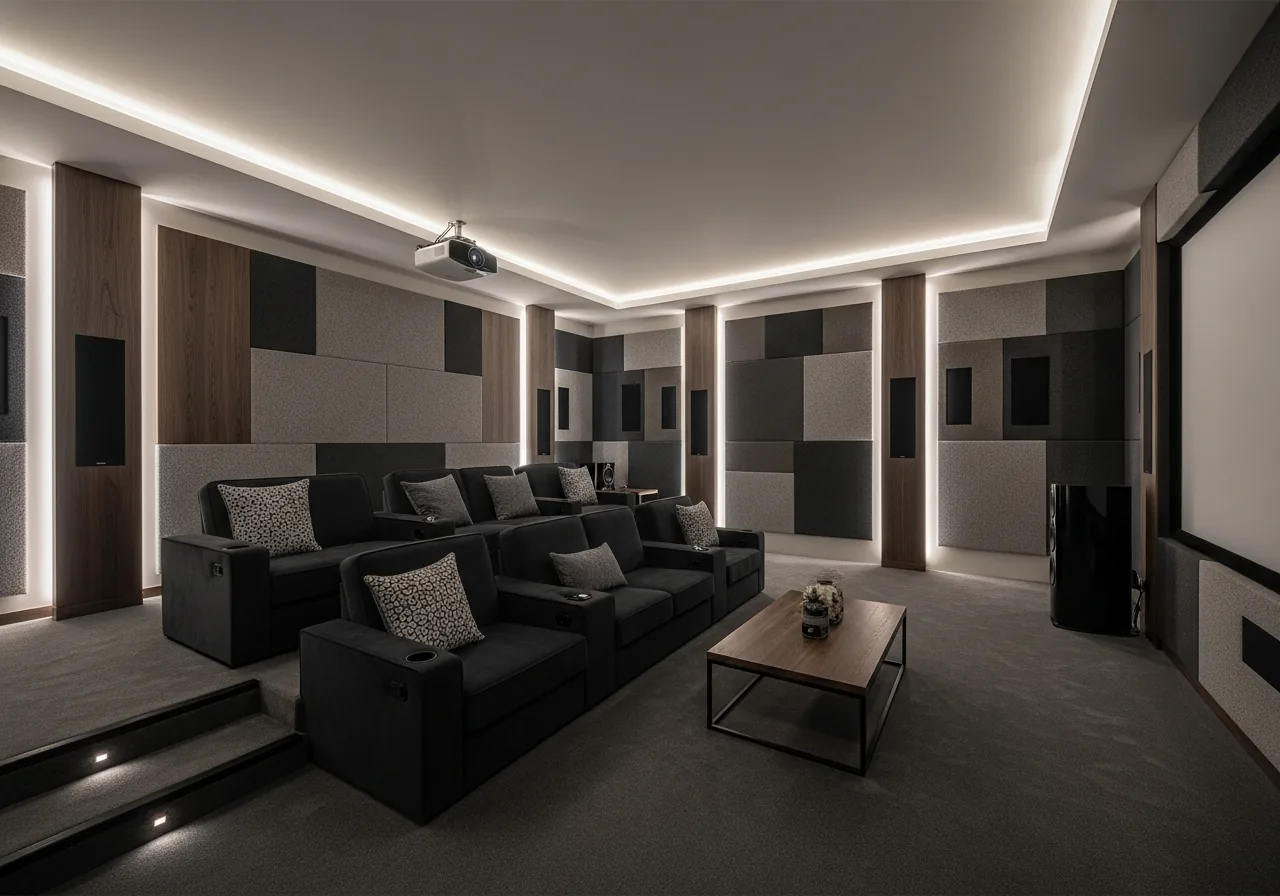
Smart Home vs Traditional Electrical Systems in UAE
Planning a new villa or major renovation in UAE? You'll face this decision: traditional electrical or smart home automation?
Let's compare both systems—honestly—so you can make an informed choice.
Traditional Electrical System
What It Is
Standard wiring + physical switches + manual control.
Components:
- Light switches on every wall
- Thermostat for each AC zone
- Manual shades/curtains
- Separate remote controls (TV, audio, etc.)
- Basic security panel
How it works: You physically walk to each switch/control.
Smart Home Automation System
What It Is
Integrated control system managing lighting, climate, shading, audio, security via centralized intelligence.
Components:
- Smart switches/dimmers (networked)
- Centralized control processor
- Touchscreen keypads + app control
- Motorized shades
- Integrated AV control
- Security with remote monitoring
How it works: One interface controls everything. Automated based on time, occupancy, sunlight.
Head-to-Head Comparison
1. COST
Traditional Electrical (5,000 sqft villa):
- Electrical rough-in: AED 40,000
- Switches & fixtures: AED 25,000
- AC thermostats: AED 8,000
- Manual shades: AED 60,000 (motorized shades not included)
- Basic security: AED 30,000
- Total: AED 163,000
Smart Home Automation (same villa):
- Smart electrical + control system: AED 90,000
- Motorized shading: AED 100,000
- Climate automation: AED 50,000
- Multi-room audio: AED 70,000
- Integrated security: AED 70,000
- Network infrastructure: AED 30,000
- Total: AED 410,000
Winner: Traditional (initial cost 60% lower)
But wait—read the rest before deciding...
2. ENERGY EFFICIENCY
Traditional System:
- Manual control (lights left on accidentally)
- No occupancy detection
- No sun-tracking shading
- Fixed thermostat settings
- Annual DEWA bill: AED 42,000 (typical 5,000 sqft villa)
Smart System:
- Automatic light shutoff (occupancy sensors)
- Climate setback in empty rooms
- Solar tracking shading (blocks heat before entry)
- Energy monitoring & optimization
- Annual DEWA bill: AED 28,000 (33% reduction)
Annual savings: AED 14,000
Winner: Smart (pays for itself in energy savings over time)
3. DAILY CONVENIENCE
Traditional System:
- Morning: Walk to 6 rooms turning on lights, adjusting 4 thermostats, opening shades manually (10-15 minutes)
- Leaving home: Check all rooms, turn off lights, adjust AC, arm security (5-8 minutes)
- Movie night: Dim lights room by room, close shades, find TV remote, find audio remote, adjust (8-10 minutes)
- Bedtime: Walk entire house turning off lights, checking doors, setting alarm (6-8 minutes)
Daily time spent on home control: ~35 minutes
Smart System:
- Morning: "Good Morning" scene activates automatically (0 minutes)
- Leaving home: Tap "Away" button (5 seconds)
- Movie night: "Movie Time" scene—lights, shades, AV, climate (5 seconds)
- Bedtime: "Goodnight" scene (5 seconds)
Daily time spent on home control: ~1 minute
Time saved: 34 minutes per day = 207 hours per year
Winner: Smart (your time has value)
4. UAE CLIMATE SUITABILITY
Traditional System:
- Shades manually opened/closed (often forgotten → furniture UV damage)
- AC runs at fixed temp (even when house empty)
- No protection against afternoon sun (rooms overheat)
- Manual fan control (outdoor spaces unusable midday)
Smart System:
- Automated sun tracking (shades close as sun moves)
- Occupancy-based cooling (saves energy, maintains comfort)
- Geofencing (house cools before you arrive home)
- Automated outdoor misting/fans (extends outdoor season)
Winner: Smart (designed for extreme climate)
5. PROPERTY VALUE
Traditional System:
- Standard feature (no premium)
- Buyers expect it (neutral)
Smart System:
- 8-12% property value premium
- Faster sales (appeals to 60% of luxury buyers)
- Differentiation in competitive market
For AED 10M villa:
- Smart premium: +AED 800K-1.2M
- Minus smart investment: -AED 400K
- Net value add: +AED 400K-800K
Winner: Smart (increases resale value significantly)
6. EASE OF USE
Traditional System:
- Pro: Everyone knows how to use switches
- Pro: No learning curve
- Pro: No tech troubleshooting
- Con: No scenes/automation
- Con: Must manually control everything
- Con: Multiple remotes for AV
Smart System:
- Pro: One-touch scenes (simple once programmed)
- Pro: Voice control (natural interface)
- Pro: Remote access (control from anywhere)
- Con: Initial learning curve (2-3 days)
- Con: Requires reliable network
- Con: Can be overwhelming if over-complicated
Winner: Tie (depends on user comfort with technology)
7. FLEXIBILITY & FUTURE-PROOFING
Traditional System:
- Fixed functionality (can't add features without rewiring)
- Limited expansion options
- Outdated in 5-10 years
- No integration with future tech
Smart System:
- Software updates add features
- Easily expandable (add zones, devices)
- Integrates with new technologies (voice assistants, AI, etc.)
- Future-proof infrastructure
Winner: Smart (designed for longevity)
8. RELIABILITY
Traditional System:
- Pro: Simple = fewer failure points
- Pro: Decades of proven technology
- Pro: Any electrician can service
- Con: No diagnostics (hard to troubleshoot)
- Con: No redundancy
Downtime: Rare, but repairs are manual
Smart System (Professional Installation):
- Pro: Remote diagnostics (fix issues without site visit)
- Pro: Proactive monitoring (catch failures early)
- Pro: Redundancy built in
- Con: More components = more potential failures
- Con: Requires specialized support
Downtime: 1-2 service calls per year (average)
Winner: Traditional (marginally more reliable due to simplicity)
9. SECURITY
Traditional System:
- Basic alarm panel
- Cameras record (must review footage manually)
- No remote monitoring
- No integration with lighting/access control
Smart System:
- Real-time alerts (person detected, door opened)
- AI camera detection (ignore false alarms)
- Remote viewing from anywhere
- Automated security lighting
- Integration with gate/access control
Winner: Smart (proactive vs reactive security)
10. ENTERTAINING CAPABILITY
Traditional System:
- Manual lighting adjustment per room
- Separate audio controls in each zone
- No synchronized systems
- Outdoor setup time: 15-20 minutes
Smart System:
- One-touch "Entertainment" scene
- Synchronized audio (whole home)
- Outdoor lighting + audio + climate (one button)
- Setup time: 10 seconds
Winner: Smart (transforms entertaining experience)
The Decision Framework
Choose TRADITIONAL Electrical If:
✅ Budget is extremely tight (prioritize other finishes)
✅ You're building a rental property (tenants may not appreciate smart features)
✅ You plan to sell within 2-3 years (may not recoup investment)
✅ You're uncomfortable with technology
✅ You prefer simplicity over convenience
Best for: Budget-conscious buyers, rentals, tech-averse families
Choose SMART Automation If:
✅ You plan to live in villa 5+ years (ROI timeline)
✅ You value time & convenience
✅ Energy savings matter (DEWA bills concern you)
✅ You entertain frequently
✅ You want property value premium
✅ You appreciate technology
✅ New construction or major renovation (easier installation)
Best for: Luxury villa owners, tech-forward families, long-term residents
The Hybrid Approach (Budget-Conscious Smart)
Can't afford full automation? Start smart, expand later:
Phase 1 (AED 120,000):
- Smart lighting control (main areas)
- Basic climate automation
- Network infrastructure (future-proof)
Phase 2 (Year 2-3):
- Add motorized shading
- Multi-room audio
- Advanced security
Phase 3 (Year 4-5):
- Home cinema
- Outdoor automation
- Energy optimization
This spreads cost over time while maintaining upgrade path.
LEXA's Honest Recommendation
For luxury villa owners (AED 8M+): Smart automation is worth it. The convenience, energy savings, and property value increase justify the investment.
For mid-range villas (AED 3-6M): Start with foundation smart features (lighting, climate), expand over time.
For budget villas (< AED 3M): Traditional electrical makes sense unless you're tech enthusiasts. Prioritize quality finishes over automation.
Visit our Dubai Experience Centre to test both systems side-by-side.
Frequently Asked Questions
Is smart home automation more expensive than traditional electrical? Yes. Smart automation costs 2-3x more upfront (AED 410K vs AED 163K for 5,000 sqft villa). However, energy savings (AED 14K/year), time savings (207 hours/year), and property value increase (8-12%) provide ROI over 5-10 years.
Which is more reliable: smart home or traditional electrical? Traditional electrical is marginally more reliable due to simplicity (fewer components). Professional smart systems average 1-2 service calls per year vs near-zero for traditional. However, smart systems offer remote diagnostics and proactive monitoring.
Can I upgrade traditional electrical to smart later? Yes, but retrofit costs 20-30% more than installing during construction. Wireless solutions (Lutron Caseta) minimize wall cutting. Budget AED 250K-400K for full smart conversion of existing villa.
Do smart homes really save energy in Dubai? Yes. LEXA clients report 25-35% DEWA bill reduction (AED 12,000-18,000 annually for typical villa). Savings come from automated shading (40% cooling load reduction), occupancy-based climate, and smart lighting.
Which adds more property value: smart or traditional electrical? Smart homes command 8-12% price premium in Dubai luxury market. For AED 10M villa, smart automation adds AED 800K-1.2M value, minus AED 400K investment = AED 400K-800K net value increase.