A home cinema in Dubai is a room designed for film and sport: controlled light, acoustic treatment, a Dolby Atmos speaker layout, a projector or large display, proper seating and air conditioning quiet enough not to be heard. Getting it right is mostly about the room, the acoustics and the order of works, not just the equipment. LEXA Lifestyle designs and installs home cinemas and media rooms in Dubai villas, penthouses and apartments, from the first drawing to calibration and aftercare, and you can hear a private cinema at our Experience Centre before you decide.
Whether you call it home theatre installation or a private cinema for your villa, this page is the overview of home cinema installation in Dubai. Each section links to a detailed guide when you are ready to go deeper.
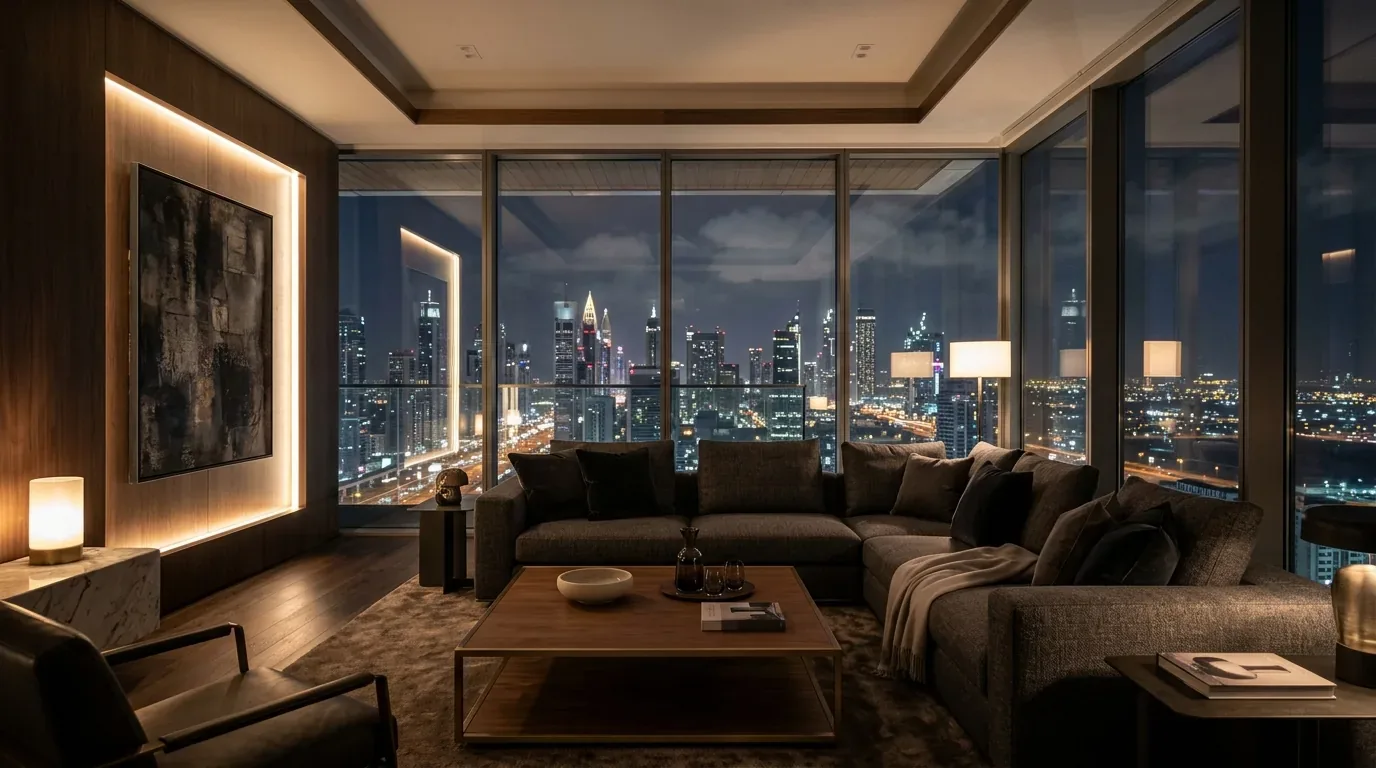
Home cinema or media room?
Both are good choices; they solve different problems.
| Item | Dedicated home cinema | Media room |
|---|---|---|
| Purpose | Film-first room used mainly for watching | Family lounge that also works for film, sport and gaming |
| Light | Dark room, few or no windows | Some daylight, controlled with blinds or curtains |
| Picture | Usually a projector and a large screen | Usually a large display or LED wall |
| Sound | Full Dolby Atmos layout with in-ceiling speakers | Atmos layout sized to the room, often more discreet |
| Room build | Acoustic walls and ceiling, often a riser and sound isolation | Acoustic treatment hidden in the interior finishes |
| Seating | Cinema recliners, often in rows | Sofas or modular seating |
A private cinema in a villa is usually a dedicated room. A media room often suits apartments, or villas where the family wants one space for everything. The home cinema solution page shows both.
What makes up a home cinema
Room and acoustics
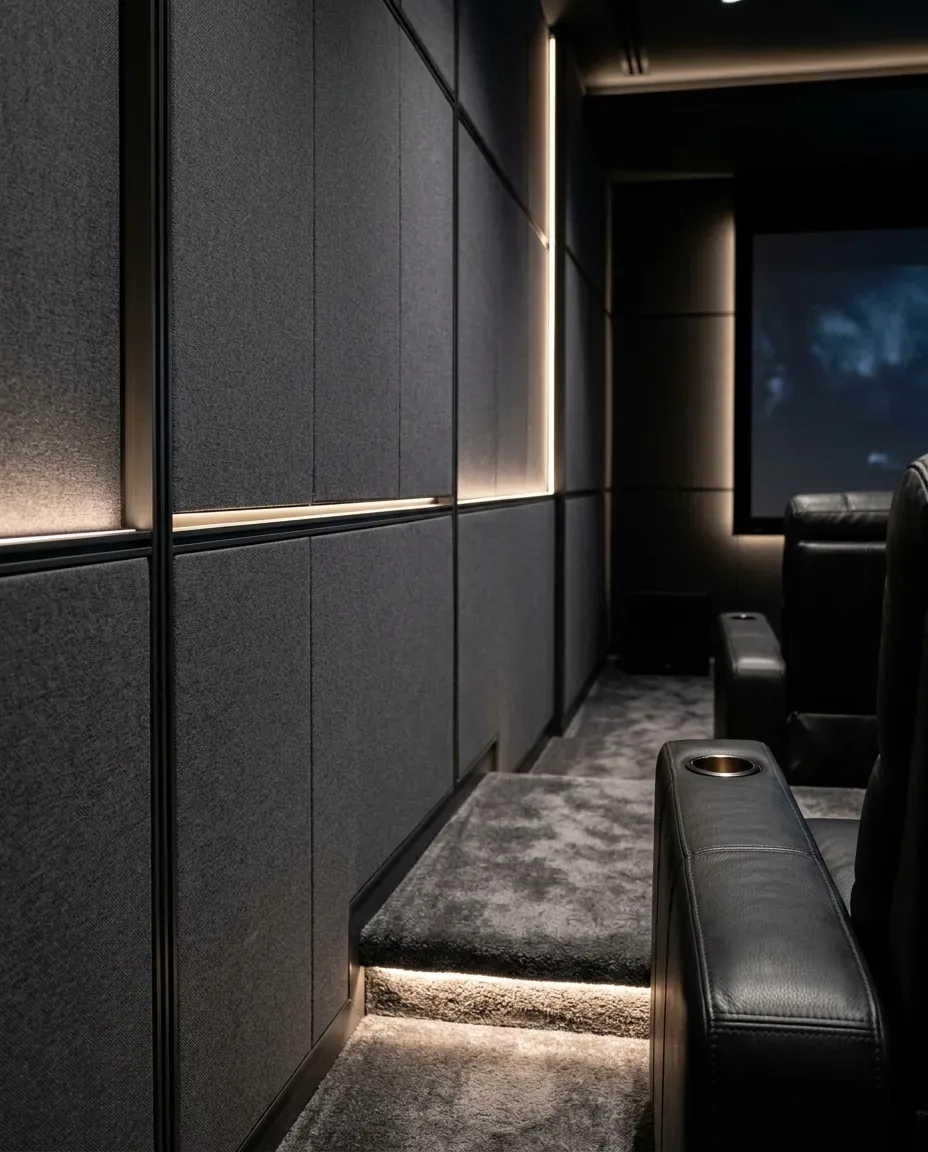
The room shapes the sound more than any speaker. Acoustic treatment controls reflections so dialogue is clear, manages bass in the corners and behind the screen, and adds diffusion in larger rooms so the space feels open rather than dead. In a well-designed cinema the treatment sits behind fabric walls or within the interior design, so it looks like a finished room, not a studio.
Sound isolation
Isolation is different from acoustic treatment. Treatment makes the room sound good inside; isolation stops sound leaving (and entering). If the cinema sits under bedrooms or next to a majlis, the walls, ceiling and door may need heavier build-ups, resilient fixings and seals. It is far easier to plan this at design stage than to add it later.
Dolby Atmos speaker layout
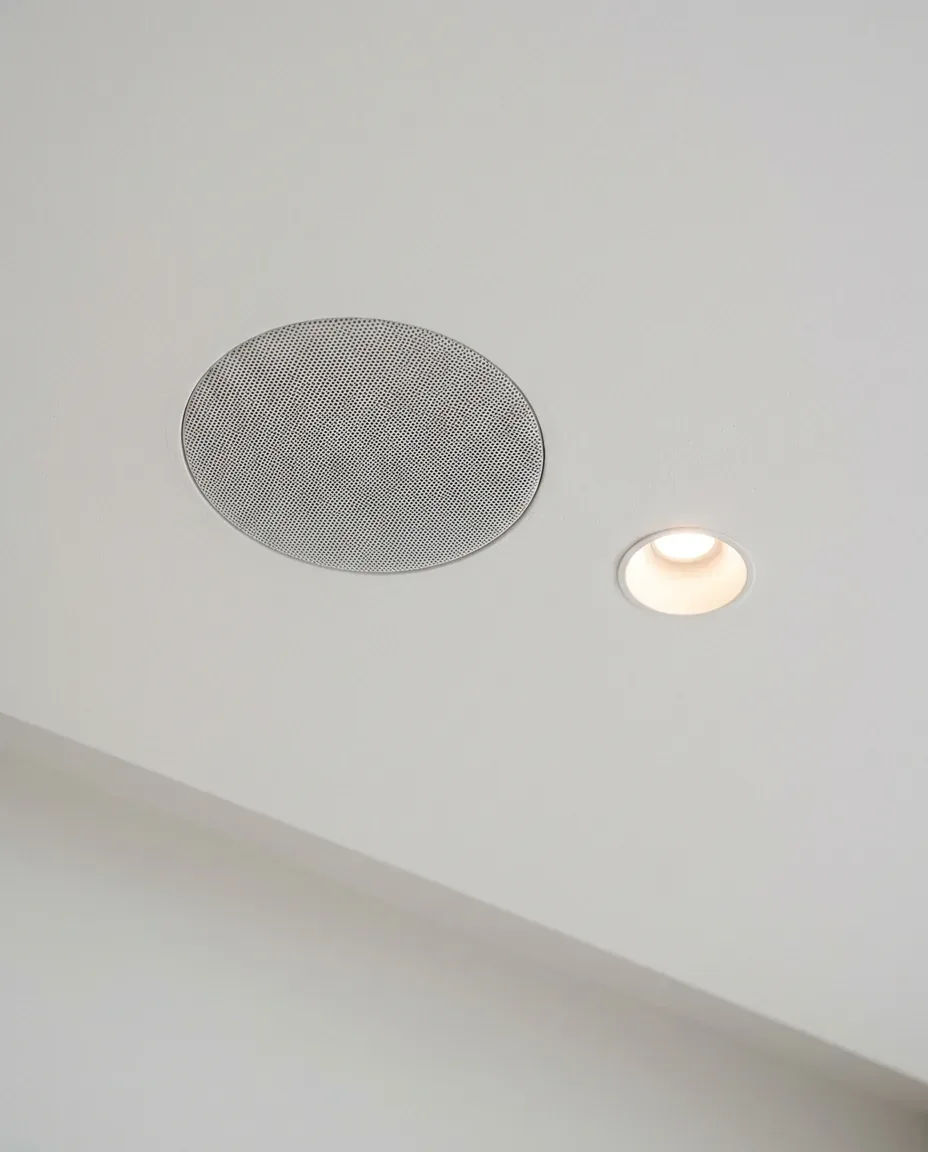
Dolby Atmos adds overhead speakers to the familiar surround layout, so sound can move above the audience as well as around it. Layouts are written as three numbers, such as 7.2.4: ear-level speakers, subwoofers and overhead speakers. The right layout depends on the room and the number of seats. Our guide to Dolby Atmos basics explains the terms.
Projector or display, and the screen
A projector and a large screen suit a dark, dedicated room and very large images. A large display or LED wall suits a media room with some daylight, or a family that watches a lot of daytime sport. Acoustically transparent screens let the front speakers sit behind the picture, where they belong. The choice between a 16:9 and a wider scope screen depends on whether the family watches mostly film or mostly TV, sport and games.
Seating and risers
Cinema recliners need generous width and depth. A second row usually sits on a riser so heads in front do not block the picture; its height comes from a sightline drawing through the room. Seating also affects sound, so the main listening position and the speaker layout are planned together.
Lighting, including starlight ceilings
Cinema lighting should be dimmable and layered: step lights for safety, wall washes or coves for intervals, and a fully dark setting for the film. A fibre-optic starlight ceiling is a popular finishing touch and can be combined with acoustic ceiling panels. Lighting control from Lutron or KNX can fade lights smoothly when the film starts. See our smart lighting page for more.
Control
One remote, keypad or app should run the whole room. A single "Watch film" scene can dim the lights, close the curtains, lower the screen, start the projector and sound system and set the temperature. We build cinema control on Savant, Control4 or Crestron, usually as part of the wider home system. Our Lutron lighting scene ideas include cinema scenes.
Quiet air conditioning for Dubai
In Dubai the air conditioning runs for most of the year, so in a cinema it is part of the sound design. Fan coil noise and air velocity at the grilles can spoil quiet scenes. Low-speed, lined ducts, fan coils placed outside the room where possible and a ventilated rack location for the equipment keep the room cool and silent. Our article on smart climate control for Dubai heat covers the wider picture.
Design process and interior ideas
A home cinema is designed in a clear sequence: the brief, choosing the room, acoustic and AV design, coordination with the interior designer, approvals, build and calibration. Each step is explained in our home cinema design process guide.
The look of the room is a separate conversation. Classic theatre, modern minimal, majlis-style family cinema and media lounge styles all work, provided the finishes are chosen with acoustics in mind. For styles, seating, wall finishes and starlight ceilings, see our home cinema interior design ideas. Architects and interior designers can find coordination notes on our architect page and in the architect automation guide.
How big should a home cinema be?
The room's finished internal size decides how many rows fit and how big the screen can be, and the seats decide the speaker layout. As a rule of thumb, a single-row room suits a 5.1.4 or 7.1.4 layout, a two-row room a 7.2.4 to 9.2.4 layout, and a large dedicated cinema 9.2.6 or more. For room sizes, screen sizing and speaker angles, use our Dolby Atmos home cinema sizing and layout guide.
What drives the cost
We do not publish home cinema price ranges, because the room build and acoustics can matter as much as the equipment, and every room is different. The main cost drivers are:
- The room size and number of seats.
- Acoustic treatment and, where needed, sound isolation.
- The speaker layout and the quality of speakers and amplification.
- Projector or display, and the screen.
- Seating and the riser.
- Lighting, starlight ceiling and control.
- Air conditioning changes for a quiet room.
- Calibration and programming.
Ask for quotes that separate equipment, room build, installation and calibration, so they can be compared fairly. Our guide to private home cinema cost in the UAE explains each driver and where to spend first.
Villa cinemas and apartment cinemas
Villas usually offer more choice: a basement, an internal ground-floor room or a converted majlis can become a dedicated cinema with rows of seats, a riser and a projector. The main questions are ceiling height, AC routes, the rack location and how much isolation is needed from bedrooms. Community or developer approvals may apply to some works. Our guides to luxury villa smart home integration and luxury home cinema in Emirates Hills go further, and the smart home villa page shows how the cinema fits into the whole home.
Apartments and penthouses usually suit a media room. Neighbours above, below and beside make sound isolation and sensible bass levels important, and building management rules can limit what changes are allowed to walls, ceilings and AC. A large display or LED wall, a discreet Atmos layout and acoustic treatment hidden in the joinery can give an excellent result. See our guides to Dubai Marina apartment automation and penthouse automation in Downtown Dubai.
Timeline: the stages of a home cinema project
Durations depend on the room build, the finishes and the rest of the villa programme, so we plan by stage:
- Consultation and brief: how you will use the room, who watches, what you watch, and the style you want.
- Survey and design: measured survey, acoustic and speaker layout, sightline section, lighting, AC and equipment list.
- Coordination and approvals: drawings shared with the architect, interior designer and MEP contractor; community or building approvals where needed.
- First fix: cabling, back boxes, power, ducting and AC changes before walls and ceilings close.
- Room build: acoustic walls and ceiling, isolation, riser, screen wall and lighting.
- Installation: speakers, screen, projector or display, seating, rack and control system.
- Calibration and handover: tuning, programming and a walkthrough for the family.
The earlier the cinema enters the drawings, the easier every later stage becomes. Contractors and developers can find coordination details on our contractors and developers pages.
Calibration and handover
Calibration is what turns a set of good equipment into a cinema. Every speaker and subwoofer is measured and tuned for level, distance and frequency response across all the seats, not just one. The picture is set up for the screen and the room's light. Then the control system is programmed so the family can use the room without thinking about it.
At handover you should receive a walkthrough of each scene and remote, a record of the settings and equipment, and clear details of who to call for support.
Aftercare
A cinema keeps performing when it is looked after. Software and firmware updates, projector care, checks on the control system and occasional recalibration after changes to the room or equipment all help. Our AMC packages cover ongoing maintenance for cinemas and whole-home systems, and you can contact us with any question about an existing installation.
Visit the Experience Centre
The quickest way to decide what you want is to sit in a private cinema and hear Dolby Atmos for yourself. At the LEXA Experience Centre on Sheikh Zayed Road, Al Quoz (Interchange 3), you can compare picture and sound, try the seating, see starlight and cinema lighting scenes and use the control system. Open Monday to Saturday, 9:00 to 19:00. Plan your visit.
Next steps
- Book a consultation to talk through the room, how you will use it and your timeline: book a consultation.
- Visit the Experience Centre to hear and see a private cinema demo: Experience Centre.
- Share your drawings if the villa is still in design, so the cinema can be planned with the architecture, AC and interiors.
You can also browse our projects, or read about majlis audio and multi-room audio for the rest of the home.
Frequently asked questions
What is the difference between a home cinema and a media room?
A dedicated home cinema is a dark room built mainly for watching, usually with a projector, a full Dolby Atmos speaker layout, acoustic walls and cinema seating. A media room is a family lounge that also works well for film, sport and gaming, usually with a large display and acoustic treatment hidden in the interior finishes.
Can a home cinema be added to an existing villa in Dubai?
Yes, often in a basement, a spare ground-floor room or a converted majlis. The main questions are ceiling height, the air conditioning routes, where the equipment rack will go and how much sound isolation is needed from the rest of the house.
Can I have a home cinema in an apartment?
Yes, usually as a media room with a large display or LED wall and a discreet Dolby Atmos layout. Sound isolation and sensible bass levels matter because of neighbours, and building management rules may limit changes to walls, ceilings and air conditioning.
Should I choose a projector or a large display?
A projector suits a dark, dedicated room and very large images. A large display or LED wall suits rooms with some daylight and families who watch a lot of daytime sport. The room's light control and the size of picture you want usually decide.
Why does air conditioning matter in a Dubai home cinema?
The air conditioning runs most of the year in Dubai, so fan coil noise and air rushing through grilles can be heard in quiet scenes. Low-speed lined ducts, fan coils placed outside the room where possible and a ventilated equipment location keep the cinema both cool and quiet.
How much does a home cinema cost in Dubai?
It depends on the room size, number of seats, acoustic and isolation work, speaker layout, projector or display, seating, lighting, control and calibration. LEXA does not publish price ranges because every room is different. Ask for quotes that separate equipment, room build, installation and calibration so they can be compared fairly.
Is a starlight ceiling worth it?
For many families it is the detail that makes the room feel like a cinema. A fibre-optic starlight ceiling can be combined with acoustic ceiling panels and controlled as part of the lighting scenes, so it should be planned with the acoustic design.
How long does it take to build a home cinema?
It depends on the room build, the finishes and the rest of the villa programme. A cinema moves through consultation, design, coordination, first fix, room build, installation and calibration, and planning it early keeps those stages in the right order.